• Retail Logistics
  • Retail Consolidation
  • Inventory Management Strategy
  • Technology
  • Resources
  • RJW Edge
  • Employment
Services
About
Locations
Team
Customers
Employment
Expand Menu Icon Collapse Menu Icon
  • RJW EDGE
  • EMPLOYMENT
  • DRIVERS
  • 630-424-2400
RJW Logo
RJW Logo
  • Retail Logistics
  • Retail Consolidation
  • Inventory Management Strategy
  • Technology
  • Resources
  • RJW Edge
  • Employment
RJW Logo
Expand Menu Icon Collapse Menu Icon
  • Retail Logistics
  • Retail Consolidation
  • Inventory Management Strategy
  • Technology
  • Resources
  • RJW Edge
  • Employment
Services
About
Locations
Team
Customers
Employment
Blue and yellow dots form a circular pattern radiating from a dark center, resembling a digital eye with circuit-like lines in the background.

9 Ways CPG Brands Can Reduce Retail Chargebacks

9 Ways CPG Brands Can Reduce Retail Chargebacks

Blue and yellow dots form a circular pattern radiating from a dark center, resembling a digital eye with circuit-like lines in the background.

9 Ways CPG Brands Can Reduce Retail Chargebacks

9 Ways CPG Brands Can Reduce Retail Chargebacks

Request a Quote Contact RJW
Request a Quote
Contact RJW

Turn retail compliance into a competitive advantage with the retail logistics experts.

Retail chargebacks do more than reduce margins. They can strain retailer relationships and make it harder for growing consumer packaged goods (CPG) brands to reach their full sales potential. For suppliers shipping into Walmart, Target, Kroger, and other major retailers, a missed delivery window, inaccurate advanced shipping notice (ASN), labeling error, or packaging issue can quickly become an avoidable deduction.

The good news is that chargebacks are often tied to predictable operational breakdowns. With the right processes, visibility, and retail logistics partner, brands can correct those breakdowns at the source and improve compliance, strengthen in-stocks, and build a more reliable path from inventory to shelf.

The RJW perspective: Retail compliance is much more than a way for your brand to simply reduce costs. It is an opportunity for your business to improve performance, protect margins, strengthen retailer scorecards, and create the capacity for growth.

Quick Guide: 9 Ways To Reduce Retail Chargebacks

1. RJW Logistics Group Can Help Your Brand Build a Retail-Ready Foundation
2. Optimize Delivery Timing Around Retailer Requirements
3. Strengthen ASN Accuracy by Aligning Electronic Data with Physical Shipments to Prevent Discrepancies
4. Standardize Labels by Retailer, SKU, and Shipment
5. Implement Quality Control Checkpoints to Catch Errors Before Shipments Leave the Warehouse
6. Audit Packaging Compliance to Verify That Pallets and Packing Meet Specifications
7. Centralize Inventory Positioning to Reduce Transit Risk and Variability
8. Review Deductions and Pursue Valid Disputes to Ensure a Proper Recovery Process
9. Partner with a Compliance-Focused 3PL

Why Chargebacks Happen & Where Brands Can Regain Control

Most retail chargebacks fall into a manageable group of categories: on-time in-full (OTIF) performance, ASN accuracy, labeling, packaging, documentation, and receiving exceptions. The most effective programs do not treat each fine as an isolated event. They connect retailer requirements to the people, processes, systems, and physical controls that determine whether an order arrives compliant and ready to receive.

When evaluating a chargeback-reduction strategy, look for five things:

1. Root-cause impact: Does it address the operational failure behind the deduction?
2. Measurable performance: Can the team track OTIF, error rates, dispute outcomes, and recovered dollars?
3. Retailer alignment: Does it reflect the requirements of the retailers and programs that matter to the brand?
4. Operational control: Is there clear ownership from production or supplier pickup through retailer delivery?
5. Scalability: Will the approach keep working as the brand adds SKUs, retailers, volume, or distribution points

The 9 Ways CPG Brands Can Reduce Retail Chargebacks

1. RJW Logistics Group Can Help Your Brand Build a Retail-Ready Foundation

Chargeback prevention starts with consistent execution across the middle mile. A retail-specialized logistics model can help brands reduce risk across the retail supply chain—from pickup and consolidation to inventory management, documentation, and delivery into retailer distribution centers.

  • Asset-based execution: Owned transportation and warehouse operations create clearer accountability and more control over service quality.
  • Retail consolidation: Combining supplier freight into full truckload movements can reduce transportation complexity, improve flow, and support stronger OTIF performance.
  • Retailer-specific compliance: Processes for barcoding, labeling, ASN accuracy, pallet configuration, and packaging help translate retailer requirements into repeatable warehouse execution.
  • Technology-enabled visibility: RJW Edge and related integrations help teams see inventory, shipment, retailer performance, and deduction activity in one connected view.
  • In-house value-added services: Packaging, labeling, kitting, and bundling help brands meet store-ready requirements before product moves to the retailer.

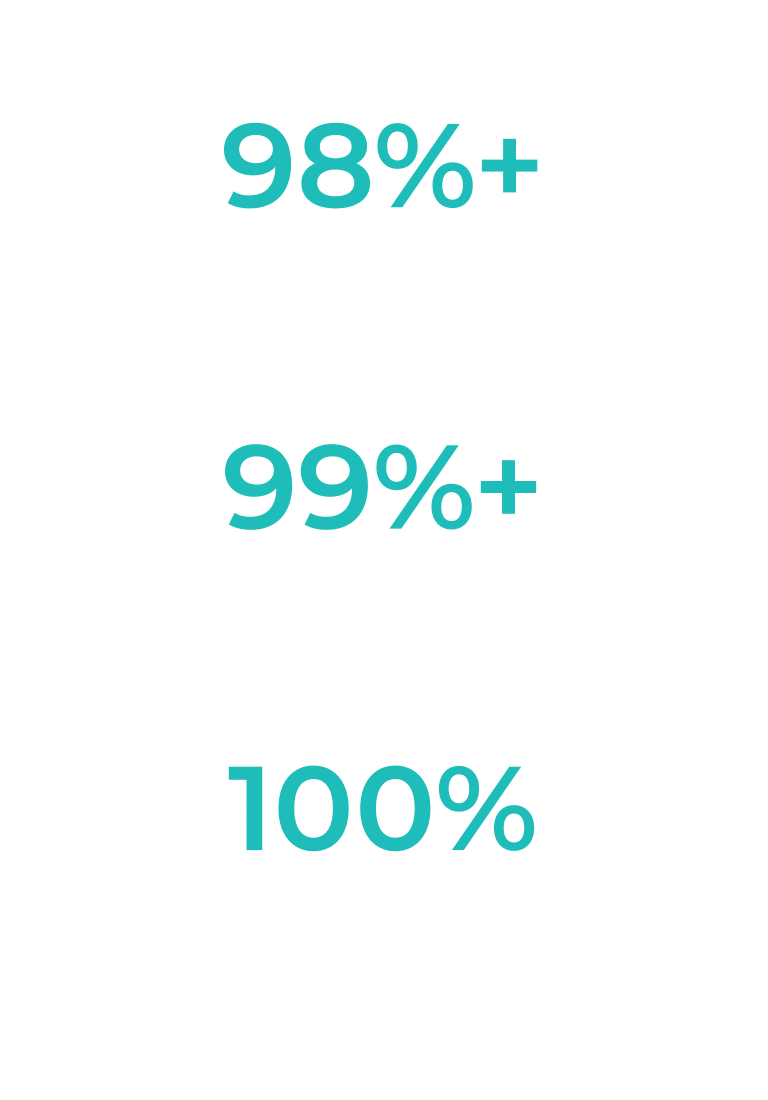
Measure it: RJW reports 98%+ On-Time, 99%+ In-Full delivery performance and nearly 100% inventory accuracy across its consolidation network.

How RJW Helps: RJW combines retail logistics expertise, operational control, technology, and customer partnership to help CPG brands reduce avoidable deductions while improving in-stocks and creating a more dependable path to growth.

2. Optimize Delivery Timing Around Retailer Requirements

OTIF penalties are often the visible result of deeper planning issues: long transit distances, limited appointment flexibility, weak carrier visibility, or inventory positioned too far from demand. Brands can reduce exposure by building retailer requirements into transportation and replenishment planning from the start.

  • Appointment discipline: Align pickup, transit, and delivery plans with retailer distribution center appointment windows.
  • Practical buffers: Build enough time into the plan to absorb weather, traffic, capacity constraints, and other disruptions without overextending inventory.
  • Lane and carrier insight: Track performance by lane, carrier, retailer, and season to identify recurring reliability issues.

Measure it: Monitor on-time performance by retailer, DC, lane, and shipment type—not just at an overall network level.

How RJW Helps: RJW builds transportation around retailer-specific delivery requirements. Through dedicated retail consolidation programs, supplier freight is combined into scheduled truckload delivers to retailer DCs, reducing the multiple terminals and handoffs common with traditional LTL. RJW teams also manage retailer-specific appointment requirements and delivery schedules, helping suppliers achieve more consistent transit times and stronger on-time performance.

3. Strengthen ASN Accuracy by Aligning Electronic Data with Physical Shipments to Prevent Discrepancies

Advance Shipment Notifications (ASN) help retailers plan receiving, labor, inventory, and replenishment. When electronic data does not match the physical shipment, the result can be a receiving exception, a deduction, an inventory issue, or a delay that affects the next order.

  • Validate before transmission: Compare warehouse pick, pack, and load data to the ASN before the shipment leaves the facility.
  • Verify at the carton or pallet level: Use scanning and documented checks to confirm item numbers, quantities, carton counts, and shipment details.
  • Synchronize timing: Make sure the ASN is transmitted accurately and early enough for the retailer to receive it before the physical shipment.

Measure it: Track ASN error rates, late transmissions, retailer receiving exceptions, and the root cause of each discrepancy.

How RJW Helps: RJW integrates EDI, warehouse, and transportation processes to improve data accuracy and reduce the manual gaps that can trigger ASN-related chargebacks.

4. Implement Quality Control Checkpoints to Catch Errors Before Shipments Leave the Warehouse

Retailers do not all use the same labeling rules. Requirements can vary by retailer, product, case, pallet, barcode format, label location, and data field. A label that works for one customer may create a compliance issue for another.

  • Use retailer-specific templates: Maintain approved formats for case labels, pallet labels, and shipping labels.
  • Verify before release: Scan or inspect labels before cases and pallets move to the shipping dock.
  • Control changes: Assign ownership for monitoring retailer updates and communicating changes to the teams producing and applying labels.

Measure it: Review labeling errors by retailer, SKU, facility, shift, and failure type so the corrective action matches the real problem.

How RJW helps: Because RJW specializes in retail logistics, retailer requirements are built into how products move through our facilities. Our teams execute retailer-specific labeling, offer value-added services to correct errors, verify compliance before shipment, and maintain clear communication as requirements change—helping prevent labeling errors from becoming deductions, delays, or disruptions at the retailer’s DC.

5. Implement Quality Control Checkpoints to Catch Errors Before Shipments Leave the Warehouse

The most cost-effective chargeback is the one prevented before shipment. Quality checkpoints create deliberate opportunities to catch incorrect items, quantities, labels, packaging, or paperwork while the issue is still inside the operation.

  • Pick accuracy: Confirm the right items and quantities are selected for the order.
  • Pack and pallet inspection: Verify case and pallet configurations, product condition, and packaging integrity.
  • Final documentation review: Check ASNs, bills of lading, packing slips, and other shipping documents before trailer release.

Measure it: Measure errors caught before shipment alongside errors discovered by the retailer. The goal is to move detection upstream.

How RJW Helps: RJW builds quality and compliance into the operating process, helping customers replace reactive problem-solving with earlier visibility and more consistent execution.

6. Verify Packaging and Pallet Compliance

Packaging requirements protect product, improve receiving efficiency, and support safe handling inside retailer distribution centers. Overstacked pallets, unstable loads, incorrect case orientation, missing slips, or improper stretch wrap can create both operational disruption and chargeback risk.

  • Maintain current specifications: Document pallet height, weight limits, case orientation, wrap standards, and slip placement by retailer.
  • Audit before the dock: Inspect completed pallets before they leave the facility.
  • Create evidence: Use photos and documentation when appropriate to support compliance reviews and valid disputes.

Measure it: Track packaging exceptions by retailer, facility, product type, and configuration to identify repeatable process fixes.

How RJW Helps: RJW’s warehouse teams and in-house value-added services help brands prepare, inspect, and move products in a way that supports retailer requirements and store-ready execution.

7. Centralize Inventory Positioning to Improve Flexibility and Reduce Risk

Maintaining separate inventory pools for different retailers can increase working capital, create unnecessary safety stick, and leave brands with product in the wrong place when demand shifts. A centralized inventory approve allows brands to maintain a shared pool of inventory that can be allocated across retailers based on actual order and demand.

  • Consolidate inventory: Maintain one shared inventory pool that can support orders across multiple retail customers instead of dedicated stick by retailer
  • Allocate based on demand: Use retailer order patterns and replenishment needs to determine where inventory goes.
  • Look for consolidation opportunities: Combine compatible freight flows to build more efficient full truckload movements.

Measure it: Review transit time, transportation cost, inventory turns, in-stock levels, and chargebacks together; optimizing one metric in isolation can create risk elsewhere.

How RJW helps: RJW’s centralized inventory model allows CPG suppliers to hold a single pool of inventory within RJW’s network and use it to fulfill orders across multiple retailers. As retail orders are received, RJW allocates product from that shared inventory and consolidates shipments into scheduled truckload deliveries to retailer DCs. This helps suppliers reduce retailer-specific inventory silos and safety stock, while improving inventory flexibility, transportation efficiency, and responsiveness to changing retail demand.

8. Review Deductions and Pursue Valid Disputes to Ensure a Proper Recovery Process

Not every deduction is valid. Retail receiving data and automated systems can contain errors, and brands that accept every chargeback without review may leave recoverable dollars on the table. A structured process can support both recovery and prevention.

  • Categorize deductions: Sort chargebacks by retailer, category, SKU, shipment, and root cause.
  • Assemble documentation: Bring together proof of delivery, ASN records, shipment details, and photo evidence when relevant.
  • Use the outcome as insight: Look for patterns in denied, approved, and recovered claims to improve future execution.

Measure it: Track total deductions, dispute rate, approval rate, dollars recovered, days to resolution, and recurring root causes.

How RJW Helps: RJW Edge gives customers greater visibility into retailer performance and supports claims and dispute workflows, helping teams move from manual review to more consistent, data-informed action.

9. Partner with a Compliance-Focused 3PL Transferring Execution Risk to RJW, the Retail Logistics Experts

For many CPG brands, reducing chargebacks is not about adding another isolated process. It is about improving the operating model behind the shipment. A retail-specialized 3PL brings the infrastructure, expertise, systems, and accountability needed to make compliance repeatable at scale.

  • Retail expertise: Look for practical knowledge of retailer requirements, receiving operations, scorecards, and compliance programs.
  • Operational control: Evaluate ownership of warehouses, transportation, quality, technology, and customer support.
  • Visibility and accountability: Choose a partner that can show performance, explain exceptions, and act quickly when conditions change.

Measure it: A strong 3PL relationship should improve measurable performance while also making the day-to-day supply chain easier to manage.

Why RJW: RJW is a strategic retail logistics partner, not a generic freight provider. As The Retail Logistics Experts, RJW helps CPG brands simplify complexity, improve performance, increase in-stocks, and move toward their full sales potential with confidence.

How to Measure Chargeback Reduction

A useful measurement program tracks both prevention and recovery. Prevention metrics show whether the operation is becoming more reliable. Recovery metrics show whether the brand is identifying and pursuing deductions that should not stand.

Measure What It Tells You Examples
Prevention Whether execution is improving before product reaches the retailer. OTIF, in-full, ASN error rate, labeling errors, packaging exceptions, receiving issues
Recovery Whether the brand is recovering dollars from invalid or incorrectly applied deductions. Dispute rate, approval rate, dollars recovered, days to resolution
Business impact Whether better logistics performance is supporting growth. In-stocks, transportation cost, inventory turns, retailer scorecards, sales opportunity

Leading CPG suppliers review chargebacks by retailer, category, and root cause. RJW customers can use RJW Edge and related reporting to bring retailer performance, inventory, product, and compliance information into a more connected view, supporting faster decisions and proactive issue resolution.

Why RJW is the Right Partner for Chargeback Reduction

Chargebacks are rarely caused by one moment or one person. They are usually the result of disconnected processes across transportation, warehousing, inventory, data, packaging, and retailer requirements. RJW addresses those connections with an integrated retail logistics model built around accountability, transparency, service, and progress.

With retail consolidation, asset-based operations, retailer-focused compliance, in-house value-added services, and proprietary technology, RJW helps brands move product more efficiently and perform more consistently with retailers. The outcome is more than fewer fines: it is a clearer, more controlled supply chain that supports stronger in-stocks, better retailer relationships, and growth.

Turn Compliance Into Momentum. Partner with RJW to simplify your middle mile, protect margin, and help your brand move toward its full sales potential.

Request a quote or call (630) 424-2400 to learn more.

FAQs About Reducing Retail Chargebacks

What percentage of revenue do CPG brands lose to retail chargebacks?
Industry estimates commonly place CPG trade spend at approximately 15%–25% of gross sales, with the exact rate varying by category, retailer, and operating model. Retailer deductions and chargebacks are often measured separately and may represent an additional 2%–15% of gross sales. Because these costs are not consistently defined across studies, companies should separate compliance-related deductions from planned trade and promotional spend to identify controllable root causes. *

How long does it take to see results?
Brands can see early improvement as soon as the first shipment cycles when the operating model, retailer requirements, and data flows are aligned. Broader benefits typically build over the first 90–120 days as processes stabilize, teams learn the exception patterns, and performance trends become easier to measure.

Can emerging CPG brands use these strategies?
Yes. Retail consolidation can help emerging brands access more efficient freight movements and retail-focused infrastructure without building every capability internally. The right partner can also help a growing brand become more retail-ready as volume, SKUs, and retailer relationships expand.

Which retailers have the strictest compliance requirements?
Walmart’s SQEP and OTIF standards are among the most rigorous, while Target, Kroger, Costco, and other major retailers maintain detailed requirements of their own. Requirements can change, so brands need current retailer-specific processes rather than a one-size-fits-all compliance checklist.

How do I dispute an incorrectly applied chargeback?
Start with the facts: identify the deduction category, confirm the retailer requirement, and gather supporting documentation such as proof of delivery, ASN records, shipment details, and photos of labeling or packaging when appropriate. A structured workflow can help the team submit complete claims, monitor outcomes, and use the results to strengthen prevention.

* Source: “CPG Trade Spend and Deductions: Accounting Done Right (2026)” by EightX.com.

Retail Performance That Protects Your MarginsThree teal statistics on a light gray background: 98%+ on-time, 100% inventory accuracy, 99%+ in-full.Three teal statistics on a light gray background: 98%+ on-time, 100% inventory accuracy, 99%+ in-full.

Related Articles

Insights and perspectives for today’s supply chain leaders.


A turquoise background with bold black text in the center reading "THE RETAIL LOGISTICS EXPERTS" and "FULL-SERVICE RETAIL LOGISTICS EXPERTS" below it. On the bottom right corner, there is a black button with the text "WATCH NOW" in white.

Full-Service Retail Logistics Experts


Read More

A close-up of a hand using a touchscreen tablet, featuring blue circular charts and graphical data. The background has a motion blur effect, suggesting speed and technology.

Accelerate Your CPG Business Growth with Retail Logistics Solutions


With today’s complex freight market, there’s never been a more critical time for business leaders to leverage retail logistics strategies that allow them to pivot quickly. Read More

A warehouse interior with tall shelves stocked with various goods. A worker operates a green forklift, moving a pallet of items across the polished floor. The environment is brightly lit, with ample space for navigation.

Drive Your CPG Retail Supply Chain Forward with a One-Inventory Strategy


Managing inventory at multiple warehouse locations across the region is challenging and can make product tracking and inventory planning a complicated feat for small- to mid-size CPG suppliers delivering to retail. Read More

View All Right Arrow

Reduce avoidable chargebacks, protect margin, and create a more dependable path to growth with RJW.

Request a quote or call (630) 424-2400) to learn more.

630-424-2400 Contact Us

Reduce avoidable chargebacks, protect margin, and create a more dependable path to growth with RJW.

Request a quote or call (630) 424-2400) to learn more.

630-424-2400 Contact Us

Share Now

Back to Resources

RJW Logistics Group logo
Follow Us Facebook LinkedIn YouTube

Headquarters

11240 Katherine’s Crossing
Woodridge, IL 60517
630-424-2400
  • Services
  • About
  • Locations
  • Leadership
  • Customers
  • Employment

© 2026 RJW Logistics Group Terms Privacy Policy

SmartWay Logo

We use cookies and other tracking technologies to enhance site navigation, analyze site usage, and assist in our marketing efforts. Please see the RJW Logistics Group Privacy Notice and for more detailed information on our use of cookies and other tracking technologies and the RJW Terms and Conditions. By continuing to browse this site or clicking “Accept” you are agreeing to our use of cookies and other tracking technologies, as well as our Privacy Notice and Terms and Conditions. Adjust your consent in the .

Turquoise capital letters "RJW" in a bold, italicized font on a light gray background.
Powered by  GDPR Cookie Compliance
Privacy Overview

This website uses cookies so that we can provide you with the best user experience possible. Cookie information is stored in your browser and performs functions such as recognising you when you return to our website and helping our team to understand which sections of the website you find most interesting and useful.

Necessary

Strictly Necessary Cookie are enabled at all times so that we can save your preferences for cookie settings.

Analytics

This website uses Google Analytics to collect anonymous information such as the number of visitors to the site, and the most popular pages.

Keeping this cookie enabled helps us to improve our website.

Marketing

This website uses the following additional cookies:

  • _fbp – Used by Meta/Facebook to deliver advertising and measure conversions.
  • li_fat_id – LinkedIn browser identifier for ad analytics.
  • li_sugr – LinkedIn ID used for ad relevance and optimization.
  • lidc – LinkedIn routing cookie for ad-related services.
  • bcookie – LinkedIn browser identifier for ad tracking.
  • bscookie – Secure LinkedIn browser ID used for marketing purposes.
  • _gcl_au – Google Ads conversion linker cookie for measuring ad performance.
  • IDE – DoubleClick cookie used for ad personalization and conversion reporting.
  • test_cookie – DoubleClick cookie used to test if the browser supports advertising cookies.